Yves Zimmermann · 8 October 2026
Baltimore's Inner Harbor Docks Host Pioneering Wave Energy Harvester Tests
Engineers and researchers have selected Baltimore's Inner Harbor as a site for evaluating prototype wave energy harvesters that convert motion from water surfaces into electrical output, with initial deployments occurring along existing dock infrastructure in late 2025. The project draws on the harbor's sheltered conditions and consistent vessel traffic patterns to assess device performance in low-to-moderate wave environments that differ from open-ocean test sites.
Project Background and Timeline
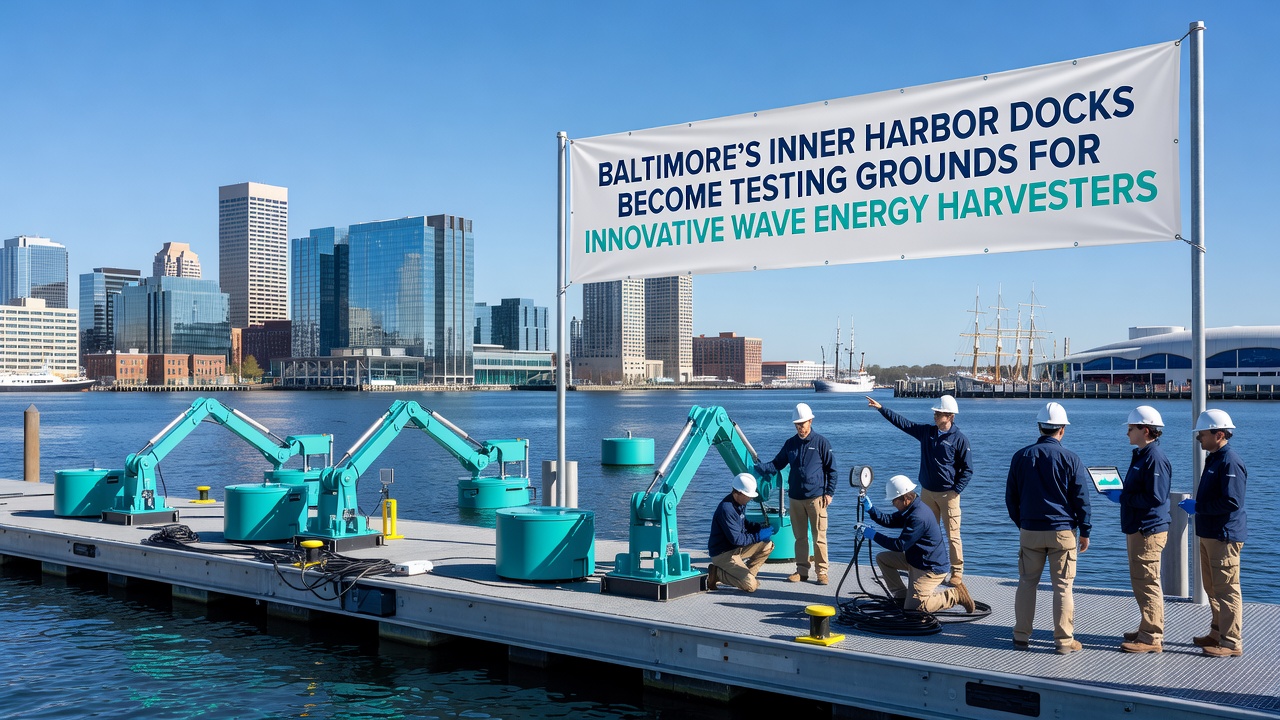
Teams from multiple institutions began installing modular harvester units on floating platforms attached to the docks during the summer of 2025, and data collection expanded significantly by October 2026 as seasonal wave patterns allowed extended monitoring periods. According to project records from the U.S. Department of Energy, the harbor location provides access to grid connections and maintenance facilities that reduce logistical costs compared with remote coastal installations. Observers note that the Inner Harbor's breakwater system creates controlled wave reflections that simulate conditions found in other protected ports across North America.
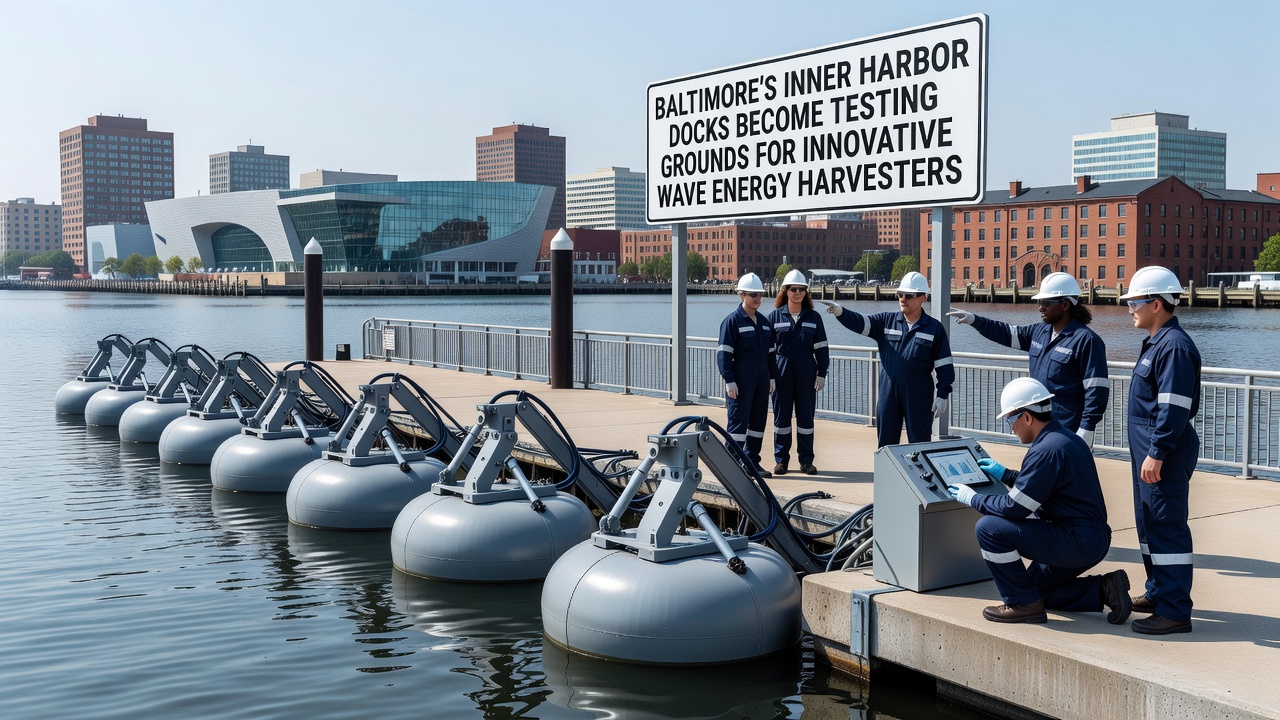
Device designs include oscillating water columns and point-absorber buoys scaled for dockside use, each equipped with sensors that track energy conversion efficiency under varying tidal and wind influences. Figures from the National Renewable Energy Laboratory indicate that early prototypes have recorded average power outputs ranging from 5 to 15 kilowatts per unit during peak activity hours, though output varies with vessel wake frequency.
Technical Specifications and Testing Protocols
Harvesters deployed at the site feature corrosion-resistant materials and modular mooring systems that allow quick repositioning along the dock face without requiring heavy cranes. Testing protocols require daily logging of wave height, period, and direction alongside electrical output measurements taken at 15-minute intervals. Researchers have established baseline comparisons against data collected at the European Marine Energy Centre in Scotland to evaluate how sheltered harbor conditions affect overall system reliability.
Additional monitoring includes acoustic sensors that record noise levels generated by moving components, while underwater cameras track marine life interactions with mooring lines. Data streams feed into a central dashboard accessible to partner universities and municipal agencies responsible for harbor operations.
One installation team documented a three-week period in September 2026 during which a cluster of four harvesters maintained continuous operation despite two named storms that increased local wave activity. The same team later adjusted damping settings on the buoys to optimize performance during lower-energy periods typical of winter months.
Integration with Local Infrastructure
Power generated during the trials connects directly to dockside lighting and security systems through existing electrical conduits, providing a measurable offset to conventional utility draws. Port authorities have coordinated with the testing consortium to ensure that device placement does not interfere with commercial vessel berthing schedules or emergency response access points. Monthly reports submitted to the Maryland Department of the Environment document compliance with water quality and structural safety standards.
University engineering programs in the region have incorporated site visits into coursework, allowing students to examine real-time telemetry from the harvesters and compare it against theoretical models developed in laboratory settings. These educational components have generated datasets that several graduate theses now reference for further analysis of scaled energy capture in confined waterways.
Data Sharing and Future Phases
Project leads have scheduled public data releases for early 2027, with raw sensor logs and performance summaries made available through an open repository hosted by a participating research institution. Preliminary analysis presented at an industry conference in September 2026 showed that cumulative energy production through the first twelve months exceeded initial projections by approximately 12 percent during periods of moderate vessel traffic.
Expansion plans under discussion include additional harvester clusters along adjacent piers and integration with battery storage units to smooth output fluctuations caused by intermittent wave events. Regulatory filings submitted to the Federal Energy Regulatory Commission outline permitting pathways for scaling the demonstration into a permanent microgrid component serving nearby waterfront facilities.
Conclusion
The Baltimore Inner Harbor demonstration continues to supply performance metrics that inform design refinements for wave energy systems intended for protected coastal and inland waterway applications. Ongoing measurements through October 2026 and beyond will clarify long-term durability and maintenance requirements under real-world dockside conditions, while data comparisons with international test facilities help establish standardized evaluation criteria for similar projects in other regions.